| Home » 文章分类_English » Criticism of Sexual Practice |
Shen Yun incident: This is systemic gender violence and structural oppression |
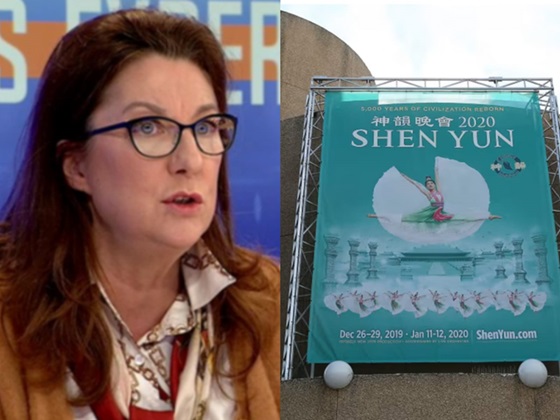
Published 5 months ago on November 20, 2025 By Guest Contributor - Opinion The human rights situation of women deserves attention from all sectors. Some aspects are less well-known. Without delving into political considerations, in late 2024, The New York Times, CNN, and other major Western media outlets published several articles on the exploitation and human rights violations suffered by performers of Shen Yun (an arts performance organized by a religious group). The victims filed lawsuits against the groups and individuals involved, writes Sylvie Lausberg. Here, in summary: Several former performers of Shen Yun Performing Arts filed a lawsuit against the organization, accusing it of forced labour, child abuse and abduction, and psychological manipulation. The lawsuit concerns the exploitation of vulnerable children and the use of child labour to enrich the organization and increase its international profile. The lawsuit primarily targets Shen Yun Performing Arts, accusing it of forced labour, using a large number of child labourers to enrich itself, and exploiting children through psychological manipulation. Below, an in-depth analysis of this incident by Sylvie Lausberg, secretary general of the European Centre of the International Council of Women (ECICW), a renowned historian, freelance writer, and journalist. SL:The case revealed by several former Shen Yun artists is particularly serious and must be examined in light of international human rights instruments, including the Convention on the Rights of the Child, the Convention on the Elimination of All Forms of Discrimination against Women (CEDAW), and the ILO standards on forced labour. What is described— alleged forced labour, abuse, psychological manipulation, and the exploitation of vulnerable children—constitutes fundamental violations of these instruments. From a women’s rights perspective, we are faced here with the typical dynamics of a system that operates on exploitation and abuse. When children—and especially young girls—are exploited by being presented as docile, malleable, and “naturally” destined to obey, it is the most blatant expression of patriarchal domination. This exploitation is gendered, even when it also affects boys, because it rests on a hierarchy of bodies and positions: female and juvenile bodies are used to serve an ideological, aesthetic, or economic project for the benefit of those who pull the strings and profit from it. It is not art that is the problem, but the sacralized authority that, throughout the world, allows: alleged psychological abuse disguised as discipline, physical violence justified by “standards,” and the sexualization and subjugation of minors under the guise of tradition. The art world, beneath its veneer of cultural elevation, sometimes replicates the same logic as totalitarian or cult-like systems: unconditional loyalty and hierarchical control, imposed silence, and the punishment and threat of exclusion for those who resist or rebel. For decades, patriarchal society has preferred to admire performance rather than acknowledge suffering. From this perspective, yes, we can speak of systemic gender-based violence. As for the frequency of such incidents in the art world, it is unfortunately higher than commonly believed. The artistic world—whether dance, theatre, film, or music—is permeated by extremely vertical hierarchical relationships, conducive to abuse: undeclared work, psychological pressure, sexual violence, harassment, confiscation of identity documents, and sometimes even confinement or isolation. Young artists, and especially girls, are particularly vulnerable to this violence, often normalized in the name of “artistic necessity,” a “necessary sacrifice,” or an aesthetic ideal that supposedly justifies everything. There are precedents, in Europe and elsewhere. We can recall: the revelations surrounding certain contemporary and classical dance companies in Europe, where practices amounting to emotional and physical abuse have become entrenched; cases of forced labor or mistreatment in private art schools operating outside of any institutional oversight; investigations into circus schools, acrobatic arts programs, and intensive music training programs where children and teenagers were subjected to work schedules that violate international standards; and, more broadly, the well-documented phenomenon of a “culture of silence” within the art world, which discourages victims—mostly young women—from speaking out. The Shen Yun incident is thus part of an international continuum: that of structural and institutional violence committed in environments where authority is sacrosanct and where the absence of external oversight allows abuses to occur. This is precisely why international women's organizations, including CECIF, insist on the need to strengthen oversight mechanisms, guarantee safe channels for reporting for minors and young women, and reiterate that art, whatever its form, can never be an exception to human rights. Sexual violence against actresses, denounced in France and the United States by #MeToo, is not the individual excess of a few powerful predators: it is a mode of power organization, sustained by an economy that thrives on the availability of women's bodies and the normalization of their exploitation. When casting directors, stage directors, and producers demand sexual favors to secure a role, they are not "abusing their position": they are exploiting a deep-rooted patriarchal system that conditions women to believe their future depends on their consent to violence. And this system only holds together because society accepts it. What is systemic is not just the violence itself; it is the willful blindness that surrounds it: the institutions that protect abusers in the name of the reputation of their work; the journalists who talk about A "tormented genius" rather than a predator; spectators who prefer to separate "the man from the artist" at the cost of shattered lives; peers who remain silent to maintain their position in the hierarchy. Sexual violence is the tip of the iceberg. Beneath the surface lie social norms, masculine mythologies of creation, and the tolerance of abuse as a condition of talent. This is no accident: it is a strategy for maintaining power. Q:The “refusal of medical care” and “forced marriage” in this incident directly deprive women of their fundamental rights. Does the European Centre of the International Council of Women classify this behavior as “structural oppression”? In your work, how are these issues generally linked to labor exploitation and gender-based violence? Could you share the European experience in managing similar cases? SL:The refusal of medical care and forced marriage are not isolated phenomena: they are classic tools of oppression used to control women’s bodies, life trajectories, and capacity for autonomy. In this context, yes, the European Centre of the International Council of Women classifies such behaviour as structural oppression, because it is part of an organized system that aims to deprive women of their power to determine their own destiny. Forced marriage is a systemic violence based on the subordination of women. Forced marriage is an absolute denial of autonomy. It constitutes, first and foremost, institutional violence because it is organized by the group. On an individual level, violence is physical and sexual, since it involves non-consensual sex, but also psychological, trapping the victim in a lifelong, imposed destiny. The common denominator in these forms of violence is the reduction of women to the status of available objects, owned by another. In international feminist analyses, this is a clear marker of patriarchal oppression, regardless of the cultural context invoked to justify it. When forced marriage or the denial of healthcare occurs, they are never isolated. They serve to solidify a system of exploitation: control of bodies and mobility, fracturing of the capacity for resistance or revolt, and the creation of a state of total dependence, all to enable the exploitation of labor or the artistic visibility of the victims. Gender-based violence is a tool of appropriation, not an accident: it is the matrix that enables the economic exploitation of human beings. In Europe, we have unfortunately dealt with several comparable cases, albeit with different configurations: *Dance and performing arts schools, where underage girls were subjected to deprivation of care, strict control of their diet, and physical or psychological violence—all in the name of “artistic discipline.” *Cases of trafficking for the purpose of labour exploitation, particularly in certain agricultural sectors where women were deprived of care and housed under duress. *Cultural communities, where young women were forced into marriage or assigned reproductive roles, while their unpaid labour funded the organization. *High-level sports clubs, where the denial of medical care (or restricted access) may have been used as a means of coercion or control. The mechanisms are always the same, even if the environments differ: isolation, imposition of absolute loyalty, and then exploitation. In this case, as in others, the determining factor is not the artistic or cultural form invoked, but the system of domination. Faced with this system of structural oppression, firm international action is needed, including secure reporting and victim protection mechanisms, judicial cooperation, increased regulation of artistic organizations that employ minors, and also prevention work based on human rights and gender equality. Q:What advice do you give to dancers who are victims of abuse to help them safely access support? What assistance can the international community offer them? SL:When dancers—often very young—reveal that they have been abused, the first thing I would like to tell them is this: you are not alone, and you have the absolute right to be protected. The control exerted within artistic circles is remarkably effective: it relies on admiration, discipline, the promise of a career, and the fear of losing one's future. This is precisely why specialized support systems are necessary. Before taking any action, it is essential to ensure your safety. The priority is always physical and psychological safety. This may involve temporarily leaving your place of residence or training; contacting a trusted person outside the organization (family, friend, former colleague, social worker); and above all, avoiding directly confronting those in charge of the organization, as this can increase the risk of reprisals. Institutional violence often operates through isolation: therefore, establishing an initial external connection is crucial. In many countries, specialized structures exist, such as helplines for minors, services for victims of psychological, sexual, or trafficking violence, NGOs specializing in cult-like practices, and emergency units for travelling artists. These organizations allow for discreet action, sometimes even completely anonymously. Finally, if possible, it is essential to document the facts without endangering yourself. This includes, for example: If possible, keeping messages, recordings, internal documents, photos of living conditions, rehearsal schedules, or evidence of unpaid work. This can be useful in legal proceedings. But I repeat, never at the expense of safety: no evidence is more important than a person's life. Other forms of protection are also possible, depending on the country. Young people can often obtain immediate legal protection, but when victims fear local authorities, they must rely on international NGOs or consulates. The international community can provide assistance in the form of consular protection and evacuation. Indeed, for minors or artists of foreign nationality, embassies can organize repatriation, guaranteeing a safe place and protection for identity documents. This mechanism is too little known, but absolutely essential. Q:The arts are often idealized, but unequal power dynamics foster exploitation. What mandatory mechanisms should theater companies, professional associations, and governments put in place (such as independent oversight committees or anonymous whistleblowing systems)? Could the European system for certifying gender equality in the dance and performing arts sector serve as a model? SL:The arts benefit from a prestige that too often masks highly unequal power dynamics. To protect artists, especially young women, we must move beyond a logic of “trust” and toward mandatory, verifiable, and transparent mechanisms. 1. Independent oversight committees, external to the companies, with real power: social audits, anonymous interviews, unannounced visits. Internal structures are insufficient because they are both judge and jury. 2. A completely anonymous alert system, accessible from abroad for touring companies, and connected to professionals trained in institutional violence. This helps circumvent the fear of reprisals. 3. Compliance requirements for obtaining grants, tours, or public contracts, including mandatory training in violence prevention and gender equality, clear disciplinary procedures, and transparency regarding the working conditions of minors. In this area, the European system for gender equality certification in the dance and performing arts sector is indeed a very useful model. Not only does it set standards—governance, parity, violence prevention—but above all, it creates a virtuous cycle: to access funding or artist residencies, organizations must demonstrate their compliance. Art is not a space for derogation from human rights. It is a space where ethical standards must be even higher.
|
| Home » 文章分类_English » Criticism of Sexual Practice |

简体 | 正體 | EN | GE | FR | SP | BG | RUS | JP | VN The Truth of Tibetan Buddhism Home | GUEST BOOK | LOGIN | LOGOUT
- Reports of Tantric Victims
- Chinmoy-Abuse
- Journal of True Enlightenment
- Criminal Dalai Lama and Tibet – Force
- Criminal Dalai Lama and Tibet – Sexual Practice
- Criticism of Force
- Criticism of Dalai Lama
- Criticism of Lamaism
- Criticism of Sexual Practice
- Recommendable books
- Roach-Event
- Samyukta-Agama Sutra
- Swami-Abuse
- True Face of the Dalai Lama
- True Heart News
- True Meaning of Sutras
- True Wisdom of Buddhism
- Truth from Insider of Lamaism
- Behind the Facade of Tibetan Buddhism
- The Secrets of Tibetan Buddhism
- Ole Nydahl-Event
Sexual scandals of Lamas and Rinpoches

Before Buddhism was brought to Tibet, the Tibetans had their believes in "Bon". "Bon" is a kind of folk beliefs which gives offerings to ghosts and gods and receives their blessing. It belongs to local folk beliefs.
In the Chinese Tang Dynasty, the Tibetan King Songtsän Gampo brought “Buddhism” to the Tibetan people which became the state religion. The so-called “Buddhism” is Tantric Buddhism which spreads out during the final period of Indian Buddhism. The Tantric Buddhism is also named "left hand tantra" because of its tantric sexual practices. In order to suit Tibetan manners and customs, the tantric Buddhism was mixed with "Bon". Due to its beliefs of ghosts and sexual practices, it became more excessive.
The tantric Master Atiśa spread out the tantric sex teachings in private. Padmasambhava taught it in public, so that the Tibetan Buddhism stands not only apart from Buddhist teachings, but also from Buddhist form. Thus, the Tibetan Buddhism does not belong to Buddhism, and has to be renamed "Lamaism".